
A little about this find
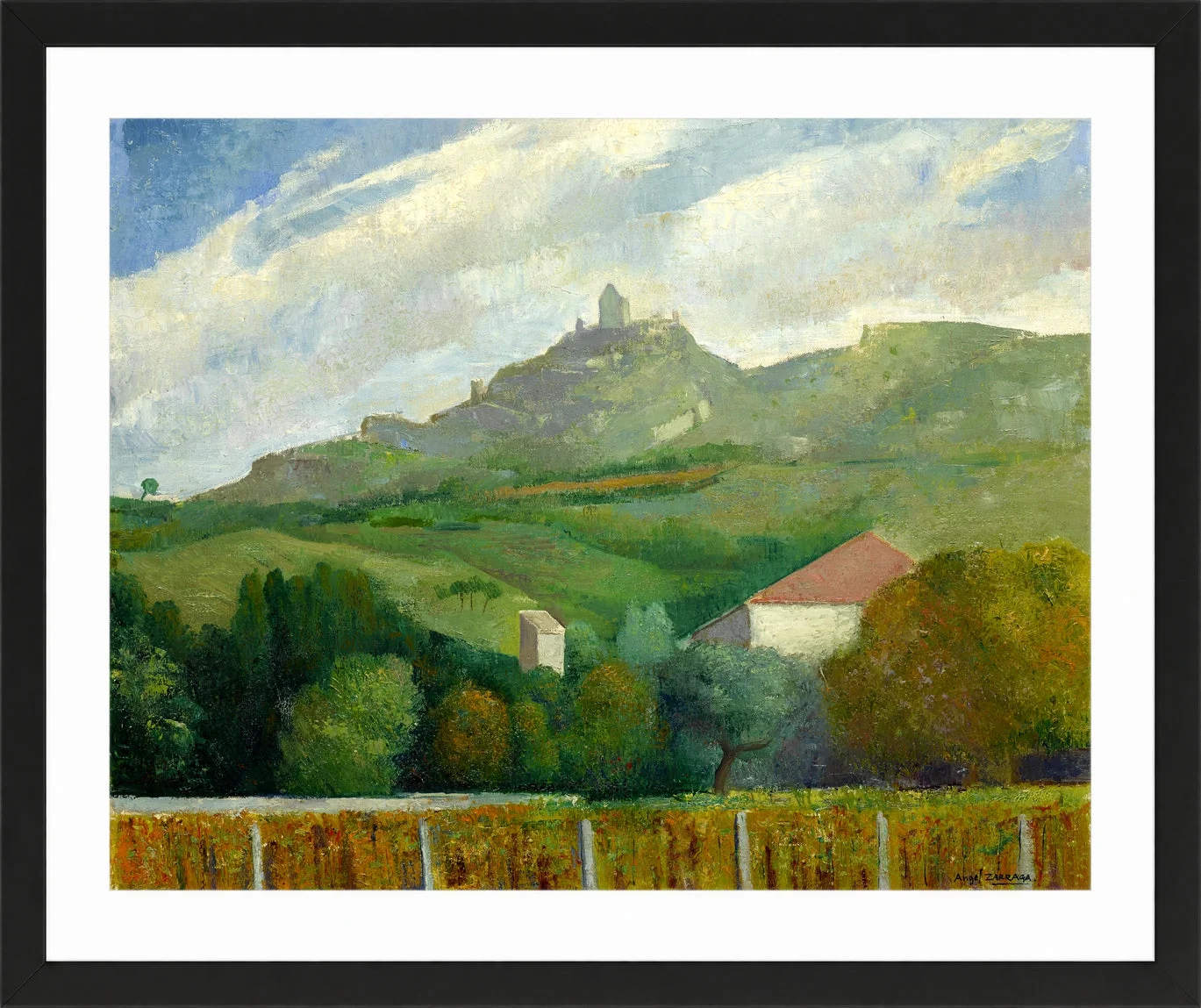
Paysage d’été (1921) by Ángel Zárraga takes a summer landscape as its starting point, but the title leaves the viewer to discover the particular character of the scene. There is no place name to dictate how it should be read. Instead, the words suggest an encounter with the natural world during a specific season. Summer may imply long days, a different rhythm of life and a heightened awareness of the outdoors, yet the painting ultimately establishes its own mood through the arrangement of the view.
Paysage d’été: place, season and atmosphere
A landscape can feel expansive while remaining carefully organised within the borders of a canvas. The spaces between its principal elements, the balance of foreground and distance and the direction in which the composition carries the eye all affect how the scene is experienced. These questions reward attention even when the location itself is left unnamed. Rather than search for a hidden narrative, it is worth considering how the whole view holds together and what kind of stillness or movement it suggests.
The date 1921 places the work within the early twentieth century, but its subject belongs to a much longer tradition of artists responding to nature. A summer landscape connects direct observation with memory: it may bring to mind the feeling of a season as readily as a particular place. That openness gives the picture room to speak differently to different viewers.
↺ New
Ángel Zárraga Fine Art Print, Paysage d’été (1921)
 FROM THE SHOP OFGallery Thane
6200 available
SellRiot Fee included
Shipping & tax calculated at checkout.
Choose a variation to see its shipping weight.
Shop policies Shipping, cancellations, returns & refunds
Shop policies
This shop hasn’t published its shipping, cancellation, return, refund, or exchange policies yet.