
A little about this find
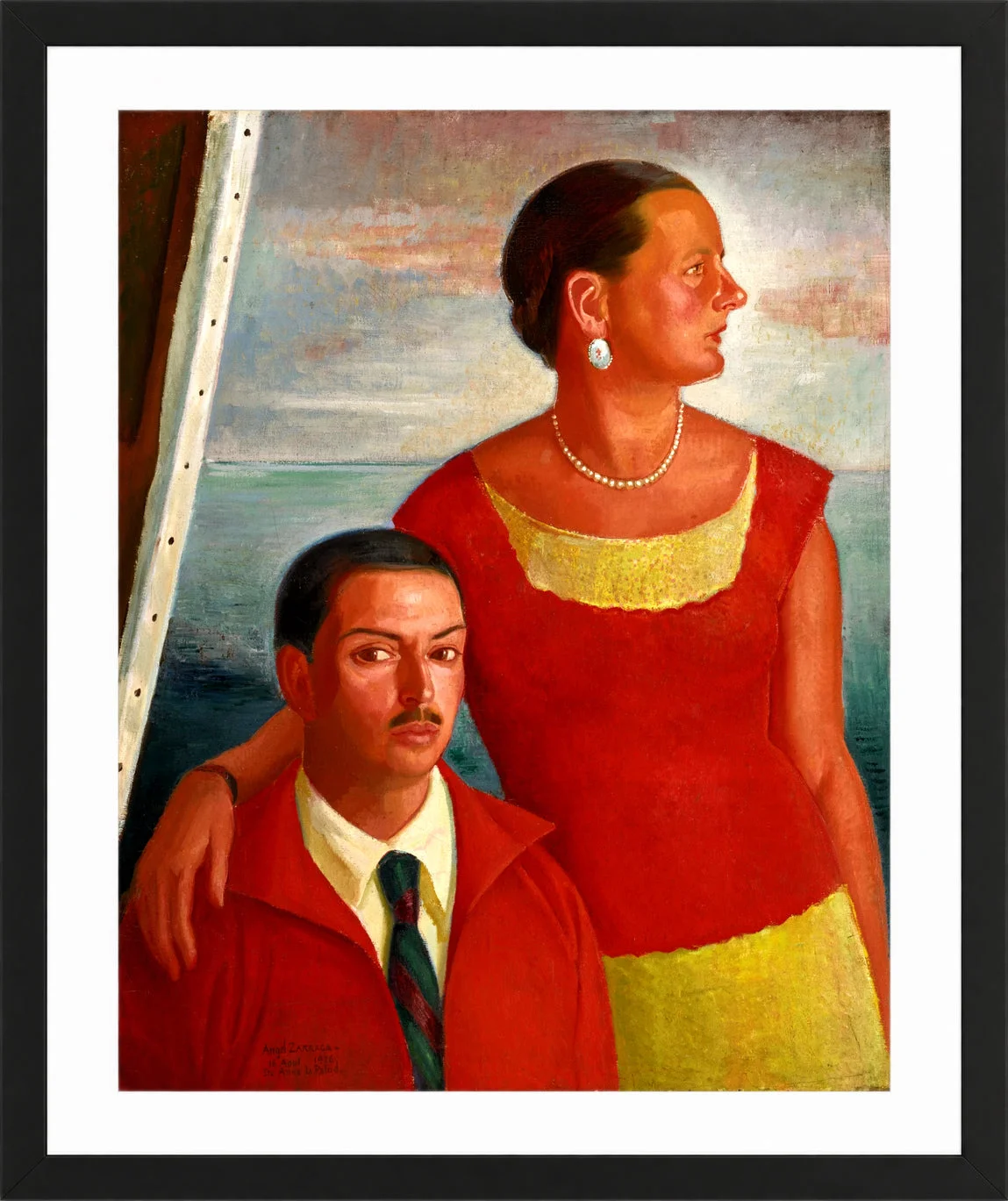
Autorretrato con Jeannette (1926) by Ángel Zárraga. The title places the artist and Jeannette together, immediately changing the usual expectation of a self-portrait. Rather than treating the painter as a solitary figure, the work asks us to consider identity through a relationship: who is looking, who is being represented, and how much of each sitter becomes part of the other's image. The Spanish word autorretrato keeps the emphasis on self-representation, yet the addition of Jeannette gives the picture a second centre of attention.
Autorretrato con Jeannette: looking at the artwork
That tension between the individual and the shared scene is the work's most engaging premise. It also makes the painting interesting to read slowly. A double portrait can become an account of closeness without needing an explicit anecdote; the placement and presence of two people carry a narrative of their own. Here, the date of 1926 provides a precise point in the artist's career, while the subject remains recognisably personal. The picture belongs in the conversation about portraiture as a way of describing a connection, not merely recording a face.
Notice how the double identity in the title alters the viewer's role. We are not simply looking at an artist looking at himself; we are being asked to consider the presence of another person within that act of self-definition. That subtle shift gives the subject its unusual intimacy.
↺ New
Ángel Zárraga Fine Art Print, Autorretrato con Jeannette (1926)
 FROM THE SHOP OFGallery Thane
6200 available
SellRiot Fee included
Shipping & tax calculated at checkout.
Choose a variation to see its shipping weight.
Shop policies Shipping, cancellations, returns & refunds
Shop policies
This shop hasn’t published its shipping, cancellation, return, refund, or exchange policies yet.