
A little about this find
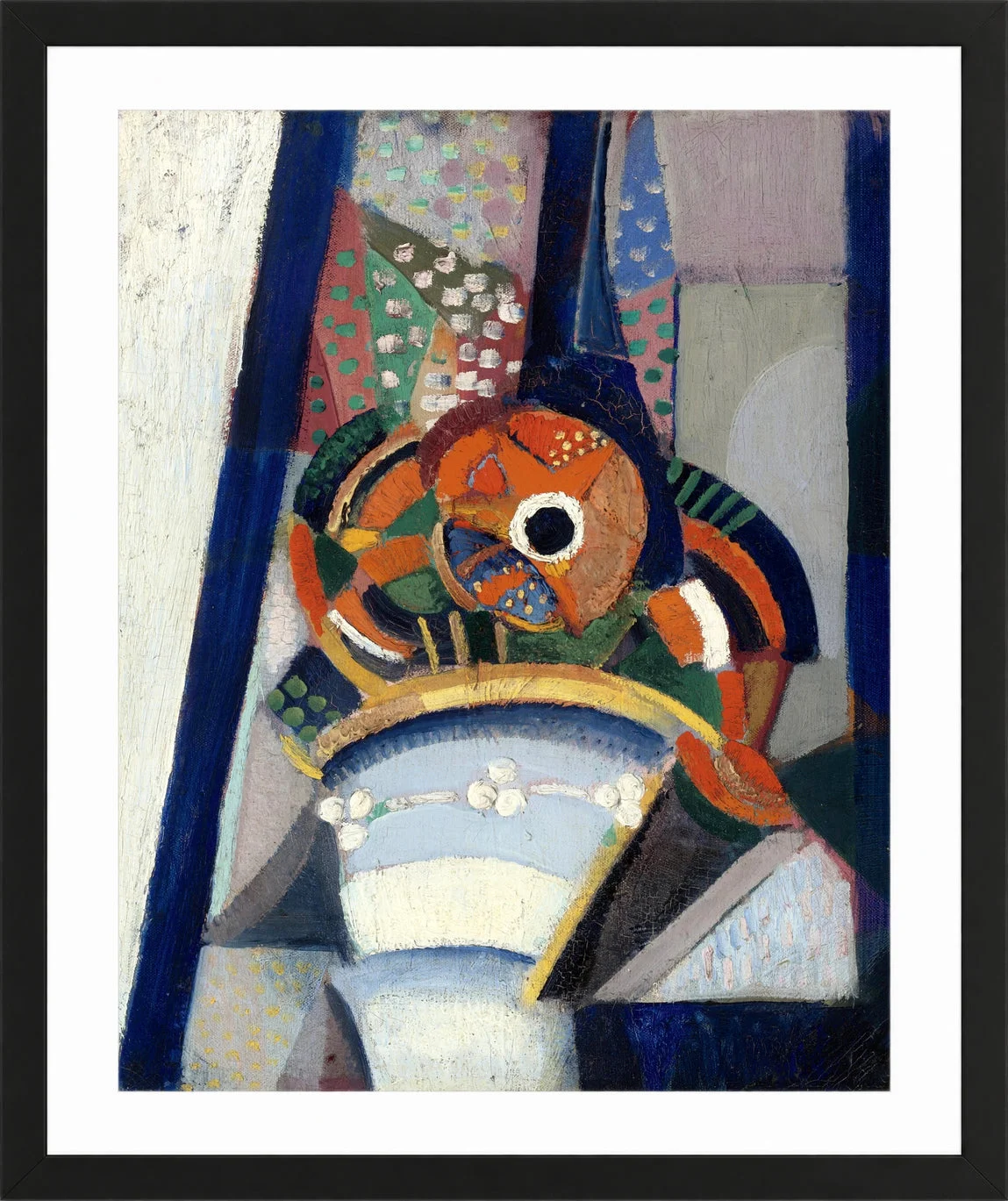
Nature morte (1915) by Ángel Zárraga. The French title Nature morte identifies a still life without specifying its constituent objects. That leaves the viewer free to approach the image first as a constructed arrangement. Still life was especially useful to early twentieth-century painters because familiar things could be examined as solid volumes, edges and overlapping forms, not just as symbols of domestic life. In this 1915 work, the generic title places the emphasis on that act of looking. We do not need an invented anecdote about the objects to recognise that their position within the frame matters.
Nature morte: looking at the artwork
The apparent quiet of a still life can contain a surprising amount of visual activity: directional contrasts, changes of scale and the continual adjustment between one shape and another. The work also reminds us that a conventional genre can support an individual visual language. The subject is ordinary by definition, but the picture's arrangement belongs to this particular painting and asks to be judged on its own terms.
The restraint of the title also gives the artwork room to speak for itself. Nothing in the wording demands that one object be treated as a hero. Instead, the subject can be considered collectively, with the structure of the entire still life becoming as important as any single recognisable item.
↺ New
Ángel Zárraga Fine Art Print, Nature morte (1915)
 FROM THE SHOP OFGallery Thane
6200 available
SellRiot Fee included
Shipping & tax calculated at checkout.
Choose a variation to see its shipping weight.
Shop policies Shipping, cancellations, returns & refunds
Shop policies
This shop hasn’t published its shipping, cancellation, return, refund, or exchange policies yet.