
A little about this find
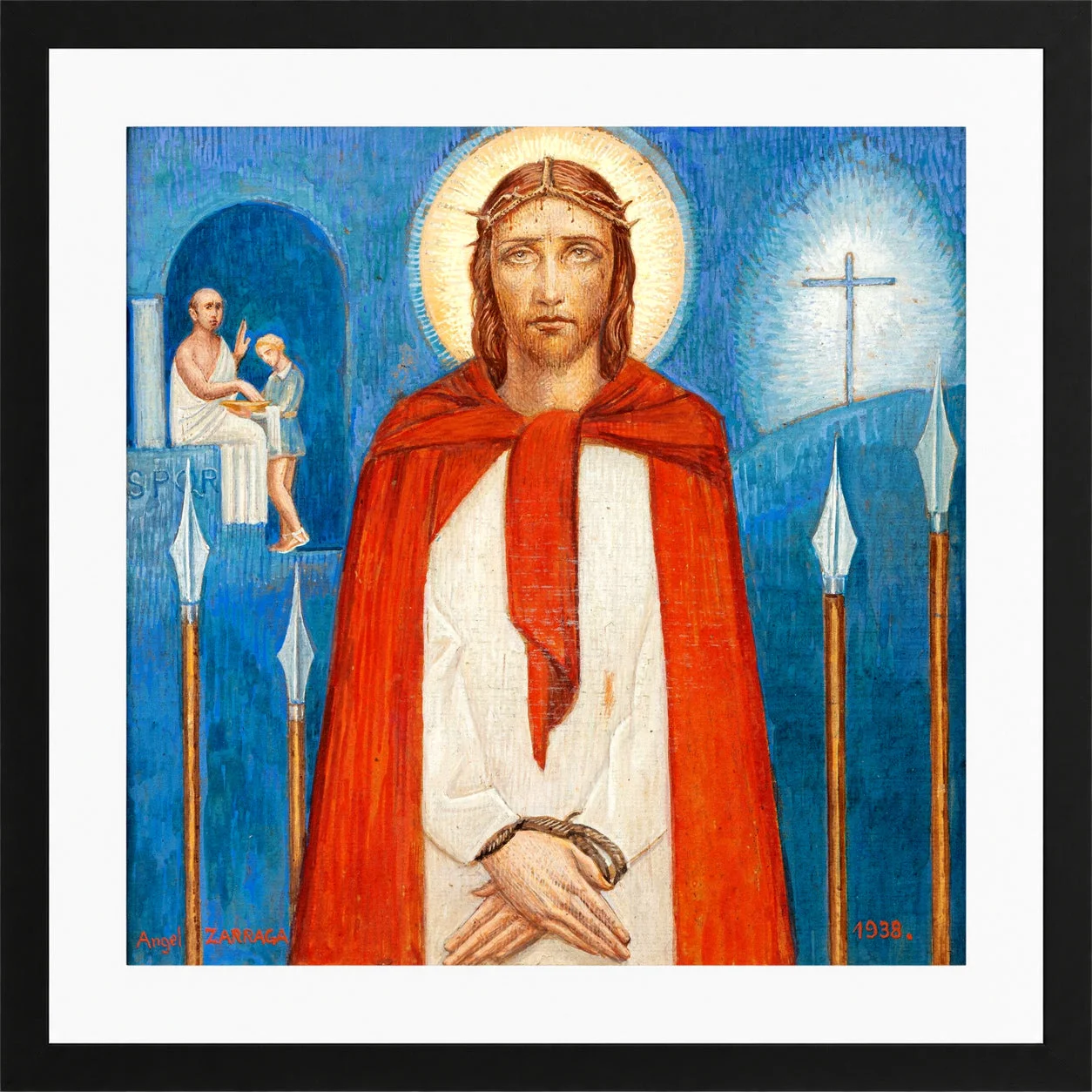
The Trial of Jesus (1938) by Ángel Zárraga. The Trial of Jesus focuses on a moment of judgement and confrontation rather than the more frequently isolated image of the Crucifixion. The subject is inherently dramatic because it brings together power, accusation and the vulnerability of a person being judged. In religious painting, a trial scene can convey a much larger story through the concentration of attention on one episode. Its narrative force comes from relationships: the accused, those exercising authority and the atmosphere of a decisive encounter.
The Trial of Jesus: looking at the artwork
Dated 1938, the work is a twentieth-century engagement with a subject that had occupied painters for centuries. Yet its meaning is not confined to historical or devotional interest. The experience of being questioned or judged is recognisably human, which gives the scene an emotional reach beyond the specific biblical narrative. The title identifies the subject clearly but leaves the details of its pictorial treatment to be discovered in the image. It asks the viewer to consider justice, conflict and the visual staging of a moment when the outcome carries enormous consequences.
The scene also invites questions about how a painter gives moral pressure a visible form. A trial is constituted by roles and relationships, not just by the appearance of one person. Even before considering religious doctrine, the title announces a charged encounter in which the distribution of authority matters.
↺ New
Ángel Zárraga Fine Art Print, The Trial of Jesus (1938)
 FROM THE SHOP OFGallery Thane
4200 available
SellRiot Fee included
Shipping & tax calculated at checkout.
Choose a variation to see its shipping weight.
Shop policies Shipping, cancellations, returns & refunds
Shop policies
This shop hasn’t published its shipping, cancellation, return, refund, or exchange policies yet.